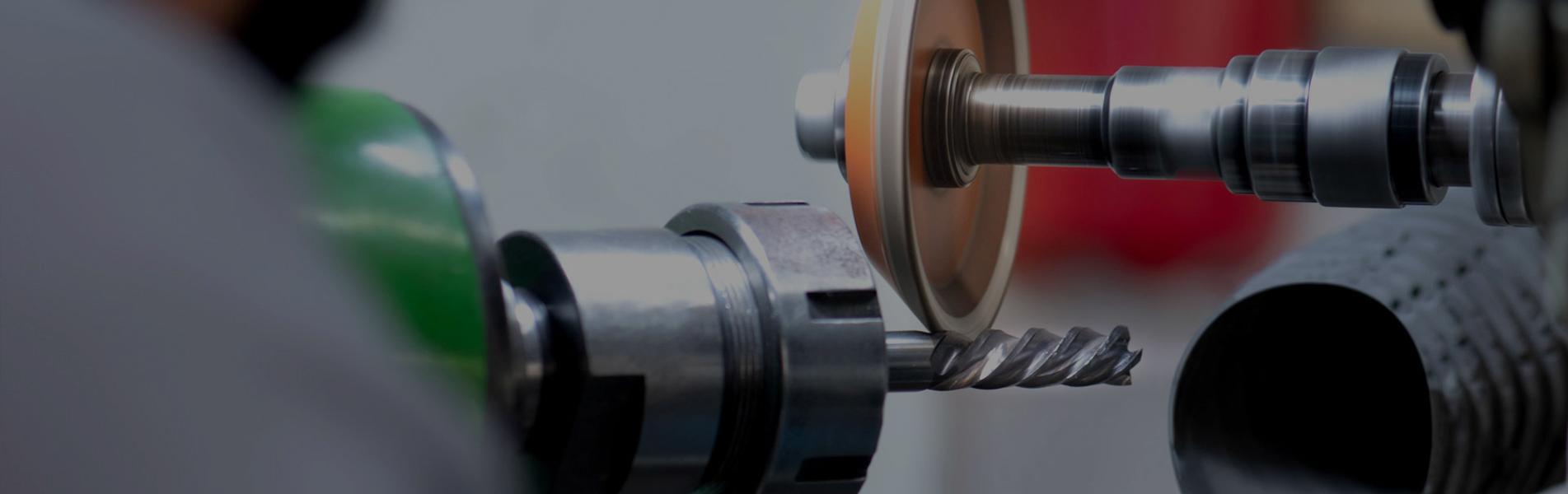
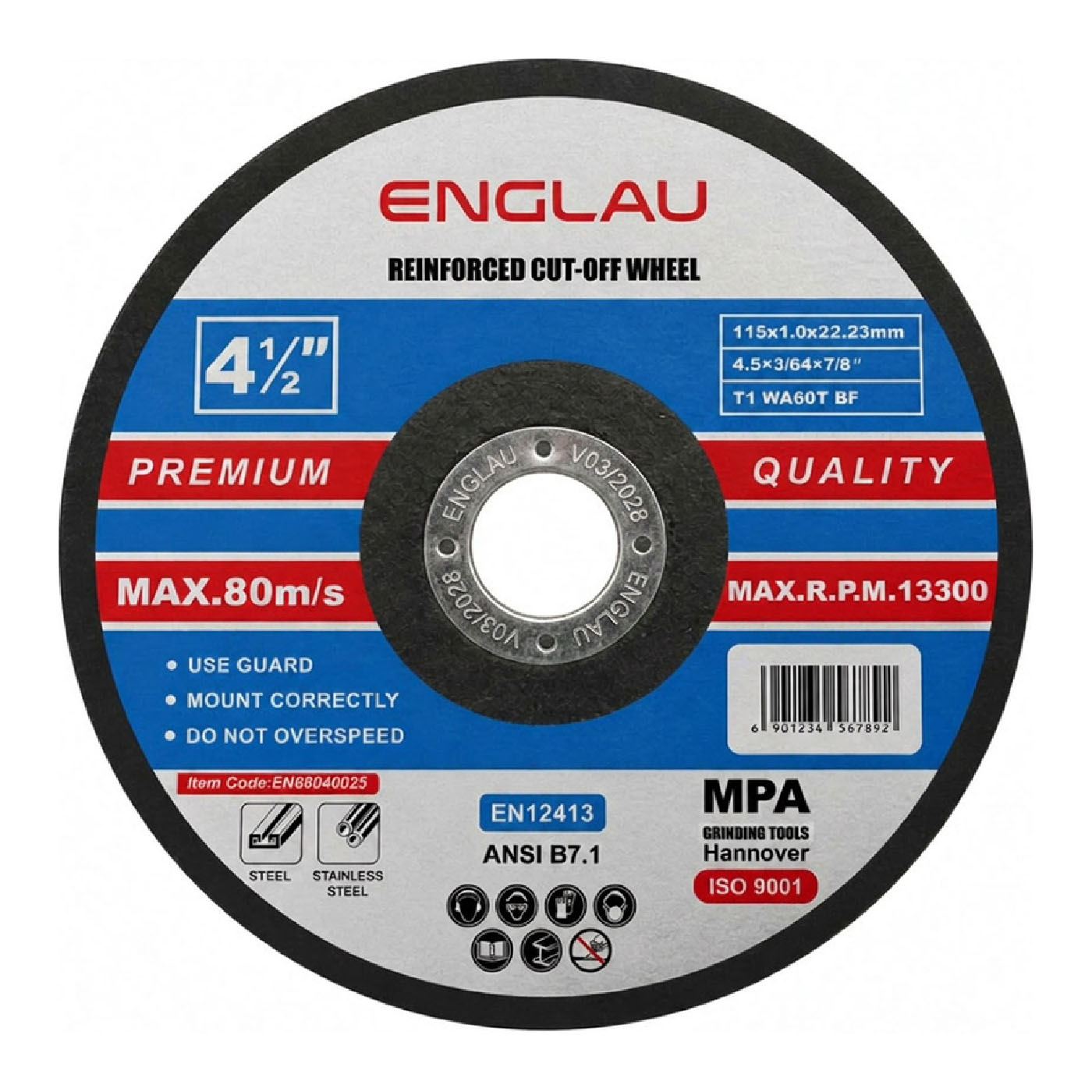
With over 20 years of expertise in the abrasives and industrial tooling industry, Englau Group designs, manufactures, and exports a comprehensive range of high-performance surface treatment solutions to industrial customers worldwide. Our core product range spans ceramic extra-thin cutting discs, standard cutting discs, grinding wheels, flap discs, fibre discs, non-woven abrasives, coated sanding belts, and wire brushes — each engineered to deliver consistent performance, extended tool life, and measurable productivity gains across the most demanding industrial applications.
Our ceramic extra-thin cutting discs, powered by proprietary CERAMICS Plus grain technology, are the tool of choice for precise, fast cutting of metal components in automotive and aerospace manufacturing. Standard cutting discs and grinding wheels deliver reliable heavy-duty performance in structural steel fabrication, shipbuilding, and construction. Flap discs and fibre discs provide effective weld dressing and surface finishing in metalworking and equipment assembly, while non-woven abrasives and coated sanding belts are widely specified for stainless steel fabrication, furniture manufacturing, and construction material processing. Our wire brushes meet the requirements for rust removal, deburring, and weld cleaning across construction sites, maintenance workshops, and industrial facilities.
All Englau Group products are manufactured in strict accordance with the German EN 12413 standard, a globally recognised benchmark for abrasive tool safety and performance. Our application engineering team works directly with industrial customers to optimise grain formulations, define precise product specifications, and provide technical support to maximise operational efficiency and tool service life.
Industrial customers can access Englau Group’s technical support directly by contacting our application engineering team by phone or email. Our engineers will review your specific production requirements or surface treatment challenges and recommend tailored abrasive solutions and process optimisations. Follow-up consultations are available to validate performance outcomes and provide ongoing support as your production needs evolve.
Metal fabrication underpins virtually every sector of modern industrial production. From structural steelwork and automotive assemblies to precision aerospace components and medical instruments, the ability to cut, form, and join metal to tight tolerances is foundational to manufacturing. Yet the performance of any fabrication operation depends not only on the chosen process but also on the material being worked on, and different metals respond in fundamentally different ways to cutting, grinding, welding, and surface treatment.
This guide provides industrial buyers, production engineers, and procurement professionals with a practical overview of the principal hard and soft metals used in fabrication, the properties that define their machinability and surface treatment requirements, and the abrasive solutions best suited to each. Throughout, we draw on Englau Group’s 20 years of application experience to recommend the right tools for the job.
1. Hard and Soft Metals — An Overview
For the purposes of fabrication and abrasive selection, metals are broadly classified into two categories: hard metals and soft metals. This distinction reflects not only differences in hardness and tensile strength, but also differences in machinability, thermal sensitivity, and the surface treatment approach required at each stage of fabrication.
HARD METALS
Hard metals include stainless steel, chrome, steel, Inconel, and titanium. Each is created by adding small amounts of other elements during the s2. Hard Metalscess. Molybdenum and chromium produce 4140 steel, which is ideal for aircraft construction. Carbon and manganese produce tough 1018 steel. Both weld easily but are prone to rust if not properly finished.
Stainless steel presents distinct fabrication challenges. The 300 series — nickel-chromium austenitic grades — is widely used in food processing equipment, pharmaceutical vessels, medical instruments, and architectural applications. It is work-hardening, meaning that aggressive or slow cutting generates heat and work-hardens the surface ahead of the tool, increasing cutting resistance and reducing abrasive disc life. This makes disc selection critical: thin, fast-cutting ceramic-grain discs are strongly preferred over conventional aluminium oxide discs for stainless steel cutting, as they minimise heat input and reduce the risk of thermal discolouration and chromium carbide precipitation at the cut edge.
17-4 PH precipitation-hardening stainless steel adds copper, chromium, and nickel to achieve the corrosion resistance of stainless steel combined with the high tensile strength of a superalloy. It is widely specified in nuclear, aerospace, and defence applications where both properties are required simultaneously.
Nickel-based superalloys such as Inconel — which contains over 50% nickel — are engineered for extreme operating environments. Jet engine combustion chambers, gas turbine blades, and nuclear reactor components are typical applications, driven by Inconel’s ability to retain mechanical integrity across a wide temperature range. From an abrasive standpoint, Inconel is among the most difficult materials to cut and grind: it work-hardens rapidly, generates significant heat, and wears conventional abrasives quickly. CBN (Cubic Boron Nitride) grinding wheels are the preferred solution for precision grinding of nickel superalloys, offering the hardness and thermal stability required to maintain consistent material removal without wheel glazing.
Cobalt-chrome alloys combine exceptional wear resistance with biocompatibility, making them the material of choice for orthopaedic implants, dental prosthetics, and cardiovascular devices. Fabrication of cobalt-chrome components requires precision abrasive tools that maintain tight dimensional tolerances without introducing surface contamination.
Titanium offers an exceptional strength-to-weight ratio — approximately twice the strength of mild steel at roughly half the weight — combined with outstanding corrosion resistance and biocompatibility. Grade 5 titanium (Ti-6Al-4V), alloyed with aluminium and vanadium, is the most widely used variant in aerospace, motorsport, and medical applications. Titanium is notoriously difficult to machine: it has low thermal conductivity, which concentrates heat at the cutting zone, and it is prone to galling and work hardening. Cutting titanium with abrasive discs requires sharp, free-cutting grain — ceramic alumina is the preferred choice — and controlled cutting speed to prevent excessive heat generation.
3. Soft Metals
Soft metals encompass a broad range of non-ferrous materials valued for their low density, high electrical and thermal conductivity, corrosion resistance, and formability. The category includes aluminium alloys, copper and its alloys, magnesium alloys, and brass. While generally lower in tensile strength than hard metals, soft metals present their own fabrication challenges — particularly in cutting and grinding, where their tendency to load abrasive surfaces and generate built-up edge can reduce tool life and surface quality if the wrong abrasive is selected.
Pure aluminium is highly malleable and offers excellent corrosion resistance, but its low strength in the unalloyed state limits its structural applications. Alloying with zinc, copper, magnesium, or silicon — combined with appropriate heat treatment — produces a family of aluminium alloys with mechanical properties suitable for demanding structural and precision applications.
6061 aluminium (silicon-magnesium alloy) is the most widely used structural aluminium grade. It welds readily, machines cleanly, and offers good corrosion resistance — making it the standard specification for automotive components, hydraulic valve bodies, marine structures, and general machinery. 7075 aluminium (copper-zinc-magnesium alloy) delivers significantly higher tensile strength and is specified for aerospace primary structures, motorsport components, and defence applications where a maximum strength-to-weight ratio is required.
From an abrasive standpoint, aluminium alloys present a specific challenge: the material is soft and ductile, and conventional abrasive grains load rapidly with aluminium swarf, reducing cutting efficiency and generating heat. Silicon carbide grain cutting discs and grinding wheels are the preferred choice for aluminium, as the sharp, friable grain structure cuts cleanly without the tendency to load like aluminium oxide. Englau Group supplies silicon carbide cutting discs and grinding wheels specifically formulated for non-ferrous metals, and our application engineering team can recommend the optimal specification for your aluminium fabrication requirements.
Magnesium is the lightest structural metal in common industrial use, with a density approximately one-third that of aluminium. Magnesium-zinc-aluminium alloys offer good machinability, excellent damping characteristics, and easy mouldability, making them well suited for power tool housings, automotive transmission cases, and aerospace interior structures. One critical consideration when grinding or cutting magnesium is fire risk: magnesium swarf and fine particles are highly flammable. Dry grinding of magnesium requires careful spark management and appropriate fire suppression measures. Wet grinding with a suitable coolant is strongly preferred where the production environment permits.
Brass — a zinc-copper alloy — combines good corrosion resistance, moderate tensile strength, and excellent machinability. C260 cartridge brass is the most widely specified general-purpose grade and is used for fasteners, fittings, rivets, and precision turned components. Brass machines and cuts cleanly, but like aluminium it tends to load abrasive surfaces. Silicon carbide grain is again the preferred abrasive for cutting and grinding brass, and non-sparking brass wire brushes are specified for surface cleaning in environments where ferrous contamination or spark generation must be avoided. Englau Group supplies brass wire brushes in both crimped and twist-knot configurations for these applications.
Copper is distinguished by its exceptional electrical and thermal conductivity, making it the standard material for electrical conductors, bus bars, and heat exchangers. It is difficult to weld by conventional arc processes due to its high thermal conductivity dissipating heat away from the weld zone, but it responds well to brazing and soldering. Copper is also used in glass-to-metal seals, semiconductor manufacturing, and antimicrobial surface applications in healthcare environments.
Copper forms the base of numerous industrial alloys — including bronze, gunmetal, tellurium copper, and nickel-copper — each engineered to enhance specific properties such as machinability, strength, or corrosion resistance for particular applications.
4. Metal Fabrication — Definition and Product Categories
Metal fabrication is the process of transforming raw metal stock — sheet, plate, tube, bar, and structural sections — into finished components and assemblies through a combination of cutting, forming, and joining operations. The process ranges from fully manual operations in small job shops to highly automated production lines in automotive and aerospace manufacturing. Fabrication shops typically specialise in a defined range of processes and materials, with their output — fabricated components, sub-assemblies, and finished structures — supplied to downstream manufacturers, construction contractors, and industrial end users.
Raw materials commonly processed in fabrication environments include flat sheet and plate, structural sections (angle, channel, I-beam), tube and pipe, bar stock, castings, and forgings. The workforce in a fabrication shop spans a range of trades — structural welders, coded pipe welders, boilermakers, sheet metal workers, and CNC operators — each responsible for specific stages of the fabrication process.
There are three categories of products made using metal fabrication. Each has a different variety of fabrication processes or sometimes just a single process. Here are the three main categories of metal fabrication:
Structural. Mostly Fabricated metal products fall into three broad categories, each representing a distinct end-use context and set of process requirements: designed for customer use, such as appliances, cars, or other products.
Industrial fabrication produces components and assemblies that form part of larger pieces of capital equipment — including machine frames, conveyor systems, pressure vessels, storage tanks, and processing plant structures. Industrial fabrication demands high structural integrity, precise tolerances, and in many cases compliance with pressure equipment or structural codes.
5. Types of Metal Fabrication Processes
Metal fabrication draws on a wide range of processes, each suited to specific materials, geometries, and production volumes. The principal processes used in industrial fabrication environments are described below, with particular attention to the abrasive tooling requirements at each stage.
Cuttining
5.1 Cuttingng
Now, let's examine each process, starting with cutting.
CUTTING
Cutting is the first and most fundamental stage of metal fabrication, reducing raw stock to the required blank dimensions before any forming or joining operation takes place. The principal cutting methods used in industrial fabrication include mechanical sawing, abrasive disc cutting, laser cutting, plasma cutting, and waterjet cutting. Each method offers a different balance of speed, precision, heat input, and operating cost, and the choice of method depends on the material, thickness, required edge quality, and production volume.
Die cutting is a specialised cutting method used primarily in sheet metal and thin plate applications. It uses a hardened steel die to stamp out a specific profile from the workpiece in a single press stroke — producing consistent, repeatable blanks at high throughput with no heat generation. The three principal variants are conventional die cutting (using a fixed die profile), rotary die cutting (using a cylindrical die rotating against the material), and flatbed die cutting (using a flat die with increased force for thicker or tougher materials).
Laser cutting delivers high precision and a minimal heat-affected zone on sheet metal and thin plate, making it well-suited to complex profiles and tight tolerances. However, laser cutting is generally limited to thinner gauges and involves high capital equipment costs. Plasma cutting is used for thicker plates and structural sections where laser equipment is impractical — it is fast and cost-effective, but produces a wider kerf and rougher edge than laser, typically requiring post-cut edge grinding or dressing before downstream processing.
Abrasive disc cutting remains one of the most versatile and widely used cutting methods across fabrication environments of all scales. It requires no specialist infrastructure beyond an angle grinder or bench-mounted drop saw, is effective on a broad range of materials and thicknesses, and — when the correct disc is selected — delivers a clean, accurate cut with minimal heat input. Englau Group’s CERAMICS Plus ceramic cutting discs are engineered specifically for high-performance abrasive cutting on carbon steel, stainless steel, and non-ferrous alloys. Available in thicknesses from 1.0 mm and diameters up to 400 mm, they deliver up to 50% faster cutting speeds and up to 600% longer service life compared to conventional aluminium oxide discs, reducing both downtime and the cost per cut across high-volume fabrication operations. The group’s cut-off and grinding discs work excellently in both hard and soft metals. With over 20 years of experience, Englau Group is a leading manufacturer and distributor of abrasives and hardware tools. A good abrasive supplier like Englau Group will stock a range of cutting discs for mild and stainless steel, suitable for bench-mounted drop saws, angle grinders, and air tools. Their products are excellent for all kinds of metal fabrication, with cutting discs and flap discs being particularly well-suited for shaping, finishing, and preparing metal surfaces. Englau Group also offers zirconia flap discs for metal finishing, general-duty diamond blades for masonry cutting, and surface conditioning products for deburring and cleaning, making it a comprehensive abrasive solution provider for diverse industrial applications.
Frequently Asked Questions: Hard and Soft Metals in Metal Fabrication
Which Englau Group abrasive products are best suited for cutting stainless steel?
For stainless steel cutting, we recommend our CERAMICS Plus ceramic cutting discs. The self-sharpening ceramic alumina grain cuts quickly with minimal heat input, reducing the risk of thermal discolouration and work hardening at the cut edge — both critical concerns with stainless steel. Our ceramic cutting discs are available from 1.0 mm thickness and up to 400 mm in diameter, and are compatible with angle grinders, bench-mounted drop saws, and air tools. For weld dressing on stainless steel, our ceramic or zirconia alumina flap discs provide consistent, controlled stock removal without contaminating the surface.
What abrasive should I use for cutting and grinding aluminium?
For cutting and grinding aluminium, silicon carbide grain is the preferred choice. Silicon carbide’s sharp, friable structure cuts cleanly through non-ferrous metals without the loading tendency that makes aluminium oxide unsuitable for aluminium applications. Englau Group supplies silicon carbide cutting discs and grinding wheels specifically formulated for aluminium and other non-ferrous metals. For surface finishing, our non-woven surface conditioning discs are widely used on aluminium fabrications to achieve a controlled, consistent finish without the risk of over-grinding or embedding abrasive particles in the soft surface.
How do I select the right abrasive for hard metals such as Inconel or titanium?
Hard metals such as Inconel, titanium, and cobalt-chrome require abrasives with high hardness, thermal stability, and sharp cutting action. For grinding Inconel and other nickel superalloys, CBN (Cubic Boron Nitride) grinding wheels are the preferred solution, offering the hardness and thermal resistance required to maintain consistent material removal without wheel glazing. For cutting titanium, ceramic alumina grain cutting discs are recommended — the self-sharpening microcrystalline structure minimises heat generation and reduces the risk of work hardening at the cut zone. Englau Group’s application engineering team can advise on the optimal product specification for your specific hard metal application.
Does Englau Group supply abrasives for both ferrous and non-ferrous? Yes. Englau Group supplies abrasive solutions for the full range of ferrous and non-ferrous metals encountered in industrial fabrication. Our product range covers carbon steel, stainless steel, aluminium alloys, copper alloys, brass, titanium, and nickel superalloys. We offer ceramic alumina, zirconia alumina, aluminium oxide, silicon carbide, and CBN grain types to match the specific cutting and grinding requirements of each material. All products are manufactured to EN 12413 standard. Our application engineering team is available to review your material and process requirements and recommend the optimal product specification. across our product range.
Can I request product samples or technical datasheets?
Yes. We welcome sample requests and can provide detailed technical datasheets for all product categories. Standard product samples are provided free of charge for qualified business customers. Shipping costs for samples are typically borne by the requester, and we will confirm shipping arrangements and options during your inquiry process. Please contact our team directly with your product requirements, and we will respond within 3–5 business days.
Does Englau Group offer application-specific or custom formulations?
Yes. With over 20 years of experience, we develop market-specific, application-optimised formulations tailored to customers’ unique usage conditions and performance requirements. To request a custom formulation, buyers are invited to contact our technical team with details of their intended application, material type, and specific performance goals. Our workflow includes initial technical consultation, proposed specification and sample development, and performance validation on the customer's production line. Upon customer approval, full-scale production begins. The typical timeline for this process is 2–3 weeks for initial formulation and sample delivery, with overall lead times varying based on the complexity of the requirements. Our team keeps you informed at each step to ensure a transparent and efficient experience.
Do you accept OEM orders and private label manufacturing?
Yes. Englau Group supports full OEM manufacturing and can produce our complete range of abrasive products under your brand, with custom labelling, packaging design, and product specifications customised to your market requirements. The minimum order quantity is 1,000 pieces per item. Our typical OEM process includes an initial requirements discussion, confirmation of artwork and product specifications, sample production and approval, and bulk manufacturing and shipment. The lead time is usually 2–3 weeks for sample development after requirements are finalised, and 4–6 weeks for bulk production after sample approval. Timelines may vary depending on order complexity and customisation needs, so we encourage customers to share their specific project requirements for accurate scheduling.
For technical inquiries, product specifications, sample requests, or OEM discussions, please contact Englau Group directly:
Mr. Eric Lau
President, Englau Group Co., Limited
Room 1205, 12/F, 130-132 Des Voeux Road Central, Hong Kong
Phone: +86 137 7034 5768
Email: eric.twintrade@gmail.com