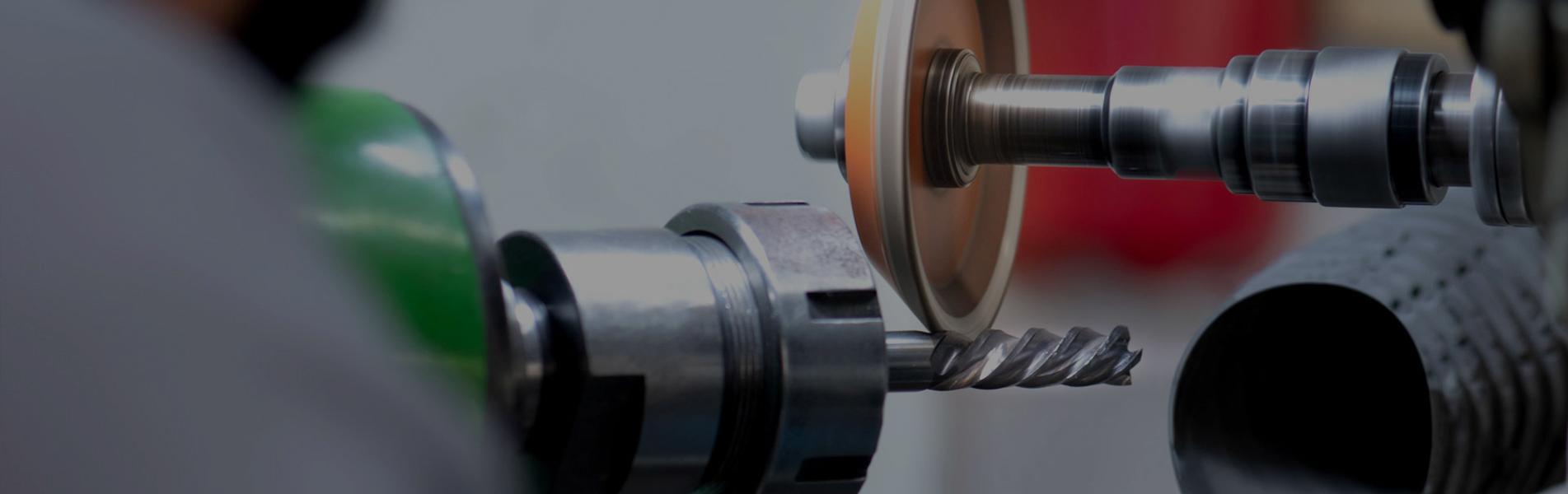
With over 20 years of expertise in the abrasives and industrial tooling industry, Englau Group designs, manufactures, and exports a comprehensive range of high-performance surface treatment solutions to industrial customers worldwide. Our core product range spans ceramic extra-thin cutting discs, standard cutting discs, grinding wheels, flap discs, fibre discs, non-woven abrasives, coated sanding belts, and wire brushes — each engineered to deliver consistent performance, extended tool life, and measurable productivity gains across the most demanding industrial applications.
Our ceramic extra-thin cutting discs, powered by proprietary CERAMICS Plus grain technology, are the tool of choice for precise, fast cutting of metal components in automotive and aerospace manufacturing. Standard cutting discs and grinding wheels deliver reliable heavy-duty performance in structural steel fabrication, shipbuilding, and construction. Flap discs and fibre discs provide effective weld dressing and surface finishing in metalworking and equipment assembly, while nonwoven abrasives and coated sanding belts are widely specified for stainless steel fabrication, furniture manufacturing, and construction material processing. Our wire brushes meet the requirements for rust removal, deburring, and weld cleaning across construction sites, maintenance workshops, and industrial facilities.
All Englau Group products are manufactured in strict accordance with the German EN 12413 standard, which is a globally recognised benchmark for abrasive tool safety and performance. Our application engineering team works directly with industrial customers to optimise grain formulations, define precise product specifications, and provide technical support to maximise operational efficiency and tool service life.
Industrial customers can access Englau Group’s technical support directly by contacting our application engineering team by phone or email. Our engineers will review your specific production requirements or surface treatment challenges and recommend tailored abrasive solutions and process optimisations. Follow-up consultations are available to validate performance outcomes and provide ongoing support as your production needs evolve.
Sheet Metal Materials — Selecting the Right Metal for Your Application
Fabricators select sheet metal based on the mechanical properties, corrosion resistance, formability, and cost requirements of the intended application. The choice of metal also directly influences the abrasive tooling required for cutting, grinding, and finishing operations. Englau Group supplies abrasive solutions specifically formulated for each of the following primary sheet metal materials:
Aluminum: Aluminum alloys offer an exceptional strength-to-weight ratio, excellent corrosion resistance, and good formability, making them the material of choice for automotive body panels, aerospace structures, and lightweight enclosures. Aluminum presents specific abrasive challenges — its ductility and low melting point make it prone to wheel loading with conventional abrasives. Englau Group’s silicon carbide cutting discs and open-structure coated abrasives are specifically formulated to resist loading and deliver clean, efficient cutting and finishing on aluminum substrates.
Brass: A copper-zinc alloy, brass combines good machinability, corrosion resistance, and an attractive appearance, making it widely used in plumbing fittings, electrical connectors, decorative hardware, and precision components. Its relatively soft, ductile nature requires abrasive tools with controlled cutting action to achieve clean edges and smooth surfaces without smearing or loading.
Bronze: A copper-tin alloy, bronze offers high ductility, excellent resistance to cracking under load, and outstanding corrosion resistance in marine environments. It is widely used in bearings, bushings, marine fittings, and artistic castings. Like brass, bronze requires careful abrasive selection to avoid smearing and achieve the required surface finish quality.
Copper: Copper’s outstanding thermal and electrical conductivity makes it indispensable in electrical wiring, busbars, heat exchangers, and electronic components. Its high ductility allows it to be formed into complex shapes, though its softness demands abrasive tools with sharp, free-cutting grains to prevent surface smearing and loading.
Steel: Steel is the most widely used material in sheet metal fabrication, valued for its strength, ductility, and availability in a broad range of grades and thicknesses. Carbon steel is the standard choice for structural and general fabrication work. Stainless steel offers superior corrosion resistance for food processing, pharmaceutical, and architectural applications. Tool steel and alloy steels are used where high hardness and wear resistance are required. Englau Group offers a comprehensive range of abrasive solutions for all steel grades — from ultra-thin cutting discs for clean, burr-free parting to ceramic alumina flap discs for weld dressing and surface finishing on both carbon and stainless steel.
The Advantages of Sheet Metal Fabrication
The material properties outlined above, combined with the versatility of modern fabrication processes, make sheet metal fabrication one of the most widely adopted manufacturing methods across industrial sectors. Understanding these advantages helps fabricators and buyers appreciate why sheet metal remains the material of choice for such a broad range of applications.
Versatility is perhaps sheet metal’s most compelling advantage. Through cutting, bending, forming, and joining, sheet metal can be transformed into virtually any shape or geometry required by the design specification. Surface finishing options — including painting, powder coating, anodizing, and polishing — further extend its adaptability, allowing fabricators to meet precise aesthetic and functional requirements across industries as diverse as automotive, architecture, electronics, and food processing.
Sheet metal fabrication is also highly cost-effective. The material itself is economical, and the combination of modern cutting, forming, and finishing processes enables both affordable bespoke production and high-volume mass manufacturing. The relatively low weight of sheet metal compared to solid stock reduces material costs, simplifies handling, and lowers transportation expenses throughout the supply chain. Durability rounds out the case for sheet metal: with the correct alloy selection and surface treatment, sheet metal components resist cracking, corrosion, and deterioration in demanding environments, including exposure to harsh weather, chemicals, and elevated temperatures.
Sheet Metal Fabrication Processes — Cutting, Forming, and Joining
Sheet metal fabrication encompasses three primary process categories: cutting, forming, and joining. Each stage presents distinct abrasive tooling requirements, and Englau Group’s product range is designed to support fabricators at every step.
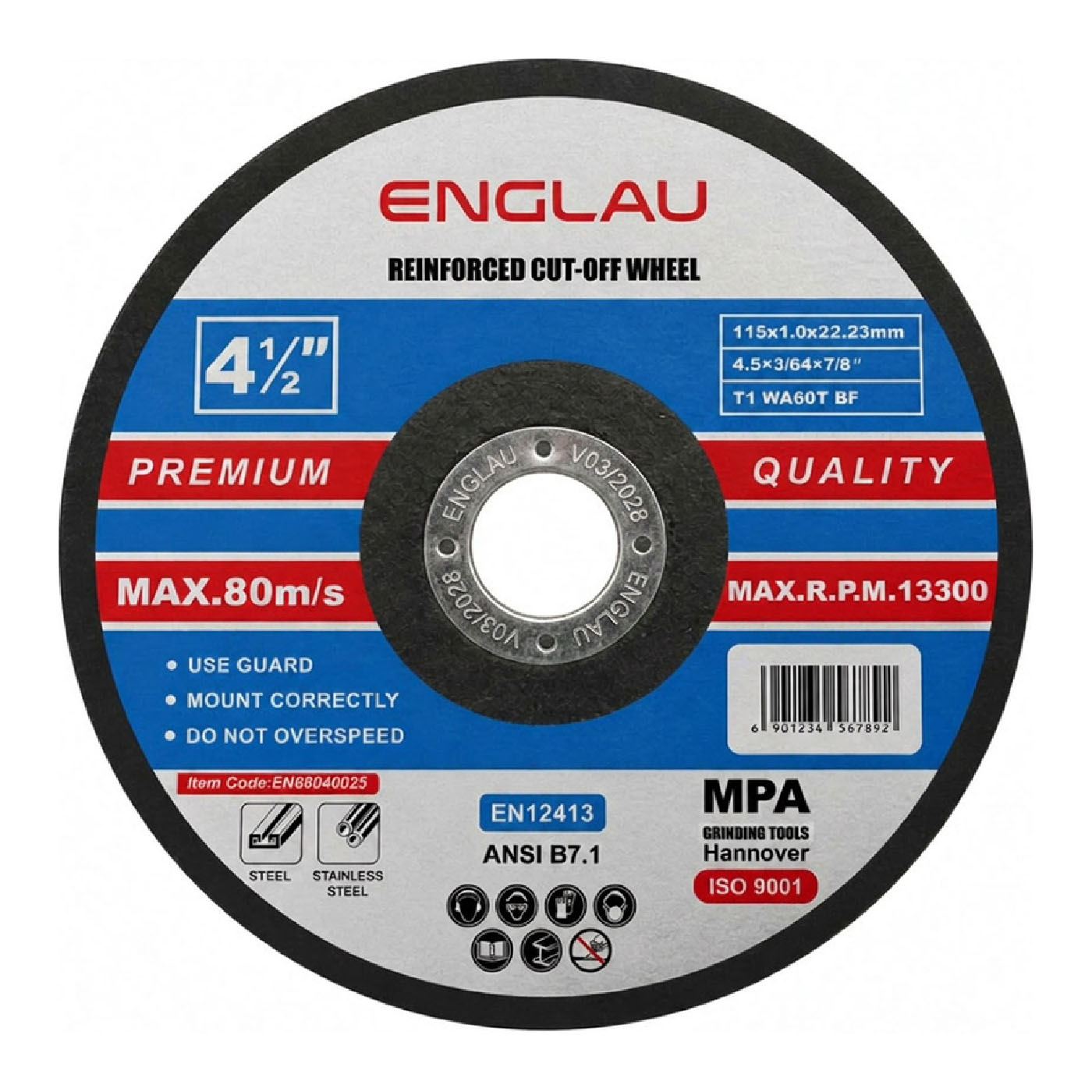
Cutting is the first stage of most sheet metal fabrication workflows. Mechanical cutting methods — including punching, shearing, and blanking — use hardened tooling to separate sheet material into the required blank shapes. Laser cutting and plasma cutting provide high-precision contour cutting for complex profiles. For on-site and workshop cutting of steel sections, pipe, and structural profiles, Englau Group’s ultra-thin cutting discs — available in 1.0 mm thickness with standard or CERAMICS Plus ceramic alumina grain — deliver clean, burr-free cuts with minimal heat generation, reducing the need for secondary deburring operations.
Forming transforms flat sheet blanks into three-dimensional components through stamping, press braking, roll forming, and stretch forming. These processes introduce residual stresses and surface irregularities at cut edges and formed radii that must be addressed before joining or finishing. Englau Group’s flap discs and fibre discs are recommended tools for edge deburring, surface blending, and weld preparation on formed sheet metal components, delivering controlled material removal with excellent conformability to the formed geometry.
Joining brings fabricated components together through welding, riveting, or structural adhesive bonding. Welding is the most widely used joining method in sheet metal fabrication, and the quality of the weld zone — both before and after welding — is directly influenced by the abrasive tools used for surface preparation and post-weld dressing. Englau Group’s ceramic alumina flap discs and non-woven surface conditioning discs are specifically recommended for pre-weld surface cleaning and post-weld dressing on carbon steel and stainless steel, delivering the surface quality required for strong, defect-free weld joints.
Industries Served by Sheet Metal Fabrication
The combination of material versatility, process flexibility, and cost-effectiveness makes sheet metal fabrication indispensable across a broad range of industries. Automotive manufacturers rely on sheet metal for body panels, structural components, and exhaust systems. Aerospace fabricators use aluminium and titanium sheets for airframe structures and interior fittings. The construction industry depends on steel sheet for roofing, cladding, ductwork, and structural connections. Consumer goods manufacturers use sheet metal for appliances, cookware, and enclosures. Electrical and electronics manufacturers rely on copper and aluminium sheets for busbars, heat sinks, and enclosures.
Across all of these sectors, Englau Group’s abrasive solutions play a critical role in the cutting, finishing, and surface preparation operations that determine the quality and performance of the final fabricated product.
Why Sheet Metal Fabricators Choose Englau Group
Sheet metal fabrication is a demanding environment for abrasive tools. The combination of thin material, tight dimensional tolerances, and high surface finish requirements means that the wrong abrasive choice can lead to heat distortion, surface contamination, dimensional inaccuracies, and costly rework.
Englau Group has spent two decades developing abrasive solutions that address these specific challenges. Our ultra-thin cutting discs minimise heat input and kerf loss during cutting, preserving the dimensional integrity of thin sheet material. Our ceramic alumina and zirconia alumina flap discs deliver controlled, consistent weld dressing and surface finishing without the risk of over-grinding or heat discolouration that can compromise stainless steel and aluminium surfaces. Our non-woven surface conditioning discs provide the gentle, controlled surface preparation that thin sheet metal requires before coating, painting, or welding.
Whether you are fabricating carbon steel enclosures, stainless steel food processing equipment, aluminium automotive panels, or copper electrical components, Englau Group has the abrasive solution — and the application engineering expertise — to help you achieve the surface finish quality your customers demand, at a cost per part that keeps your operation competitive. We invite you to contact our team to discuss your fabrication application and discover what Englau Group can do for your business.
Frequently Asked Questions
What abrasive wheel types does Englau Group offer?
Englau Group offers a comprehensive range of bonded abrasive wheels, including straight grinding wheels (Type 1), depressed centre grinding wheels (Type 27), ultra-thin cutting discs from 1.0 mm, and large-diameter cutting discs up to 400 mm. Available grain types include aluminium oxide, zirconia alumina, silicon carbide, and our proprietary CERAMICS Plus ceramic alumina. Please contact our team for a full product catalogue and specification sheet.
What materials are the Englau Group abrasive wheels suitable for?
Englau Group abrasive wheels are formulated for use on carbon steel, stainless steel, aluminium, cast iron, titanium alloys, stone, concrete, and composite materials. Our application engineering team can recommend the optimal grain type and specification for your specific workpiece material and operating conditions.
What grit sizes are available?
Our coated and non-woven abrasive products are available in a wide range of grades and grit sizes to meet specific application requirements. Typical grit sizes offered include P36 to P1200 for coated abrasives and medium to ultra-fine grades for non-woven materials, covering most common needs from heavy stock removal to fine finishing. For specialised applications or the full range of available sizes, please contact us for our complete product specification sheet.
Are your products certified to international standards?
Yes. All Englau Group abrasive products are manufactured in strict accordance with the German EN 12413 standard, one of the most stringent quality certifications in the global abrasives industry. This standard governs safety and performance requirements for bonded abrasive tools, guaranteeing structural strength, operational safety, and uniform quality across our product range.
Can I request product samples or technical datasheets?
Yes. We welcome sample requests and can provide detailed technical datasheets for all product categories. Standard product samples are provided free of charge for qualified business customers. Shipping costs for samples are typically borne by the requester, and we will confirm shipping arrangements and options during your inquiry process. Please contact our team directly with your product requirements, and we will respond within 3–5 business days.
Does Englau Group offer application-specific or custom formulations?
Yes. With over 20 years of experience, we develop market-specific, application-optimised formulations tailored to customers’ unique usage conditions and performance requirements. To request a custom formulation, buyers are invited to contact our technical team with details of their intended application, material type, and specific performance goals. Our workflow includes initial technical consultation, proposed specification and sample development, and performance validation on the customer's production line. Upon customer approval, full-scale production begins. The typical timeline for this process is 2–3 weeks for initial formulation and sample delivery, with overall lead times varying based on the complexity of the requirements. Our team keeps you informed at each step to ensure a transparent and efficient experience.
Do you accept OEM orders and private label manufacturing?
Yes. Englau Group supports full OEM manufacturing and can produce our complete range of abrasive products under your brand, with custom labelling, packaging design, and product specifications customised to your market requirements. The minimum order quantity is 1,000 pieces per item. Our typical OEM process includes an initial requirements discussion, confirmation of artwork and product specifications, sample production and approval, and bulk manufacturing and shipment. The lead time is usually 2–3 weeks for sample development after requirements are finalised, and 4–6 weeks for bulk production after sample approval. Timelines may vary depending on order complexity and customisation needs, so we encourage customers to share their specific project requirements for accurate scheduling.
For technical inquiries, product specifications, sample requests, or OEM discussions, please contact Englau Group directly:
Mr. Eric Lau
President, Englau Group Co., Limited
Room 1205, 12/F, 130-132 Des Voeux Road Central, Hong Kong
Phone: +86 137 7034 5768
Email: eric.twintrade@gmail.com