About the Englau Group
With over 20 years of expertise in the abrasives and industrial tooling industry, Englau Group designs, manufactures, and exports a comprehensive range of high-performance surface treatment solutions to industrial customers worldwide. Our core product range includes ceramic extra-thin cutting discs, standard cutting discs, grinding wheels, flap discs, fibre discs, non-woven abrasives, coated sanding belts, and wire brushes — each engineered to deliver consistent performance, extended tool life, and measurable productivity gains across the most demanding industrial applications.
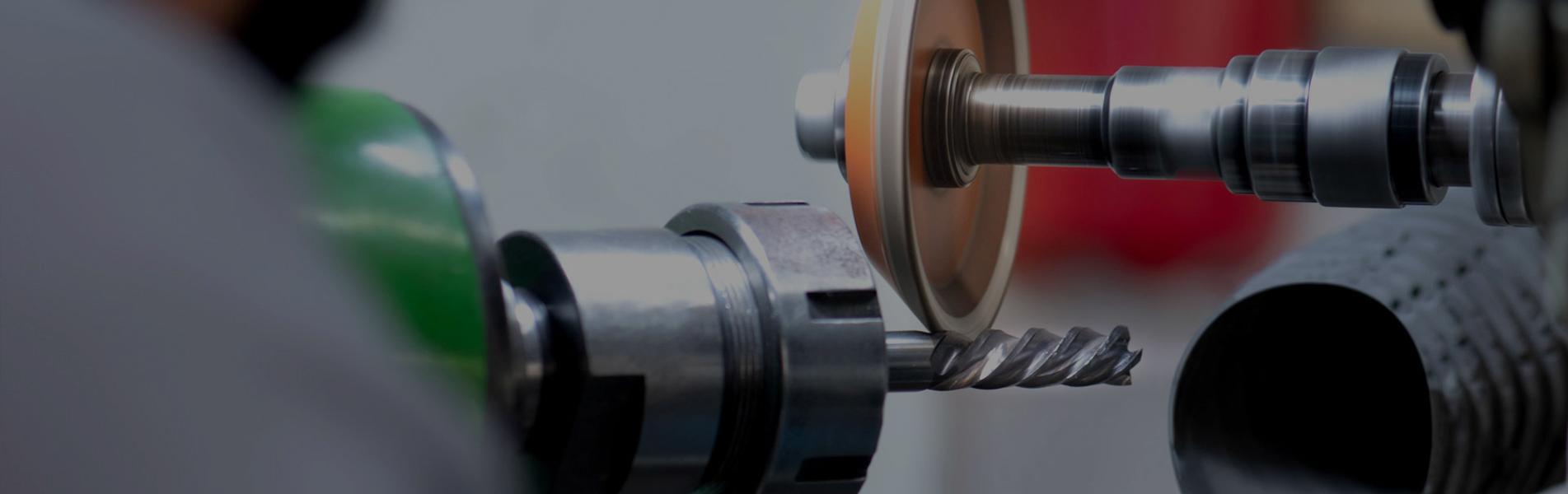
Englau Group’s abrasive wheel range is engineered to meet the rigorous demands of industrial cutting, grinding, and surface finishing operations. Available in a comprehensive range of grain types, bond systems, geometries, and diameters, our abrasive wheels are designed for use with angle grinders, bench grinders, petrol cut-off saws, and stationary grinding machines — delivering consistent, reliable performance across metalworking, structural fabrication, construction, automotive, and precision engineering applications.
All Englau Group products are manufactured in strict accordance with the German EN 12413 standard — a globally recognised benchmark for abrasive tool safety and performance. Our application engineering team works directly with industrial customers to optimise grain formulations, define precise product specifications, and provide technical support that maximises operational efficiency and extends tool service life.
Understanding Abrasive Wheels
Abrasive wheels are precision-engineered rotary tools in which abrasive grains — such as aluminum oxide, zirconia alumina, silicon carbide, or ceramic alumina — are consolidated within an inorganic or organic bond matrix to form a rigid, self-sustaining cutting or grinding tool. They are the primary tool of choice for material removal, surface conditioning, and precision finishing across virtually every industrial manufacturing and fabrication sector.
Organic bond systems — primarily phenolic resin — are cured at relatively low temperatures and offer excellent shock resistance, toughness, and self-dressing characteristics. These properties make organic-bonded wheels well-suited to high-speed cutting, fettling, and surface grinding applications where resilience under impact loading is essential.
Organic-bonded wheels are the standard specification for handheld and portable grinding machines, including angle grinders and petrol cut-off saws. Inorganic bond systems — primarily vitrified glass — are furnace-fired at high temperatures to produce a strong, rigid, dimensionally stable wheel structure. Their hardness and shape retention make vitrified-bonded wheels the preferred specification for precision grinding applications requiring tight dimensional tolerances and consistent surface finish quality.
Because there Abrasive grain type — defining cutting speed, self-sharpening behaviour, and workpiece material compatibility.ls, they’re defined by their characteristics, including:
- Grit size.
- Bond type — determining grain retention, wheel hardness, and suitability for wet or dry operation.
- The type of abrasive material used.
- The grade of the wheel.
- Wheel structure — determining grain spacing, porosity, and the wheel’s capacity to clear swarf during grinding.
Industrial Applications and Englau Group Product Recommendations
Englau Group’s abrasive wheels are designed to meet the full spectrum of industrial surface treatment requirements. Our cutting discs deliver precise, burr-free parting of carbon steel, stainless steel, aluminum, and cast iron, with ultra-thin profiles from 1.0 mm minimizing kerf loss and heat generation at the cut zone. Our grinding wheels support face grinding, periphery grinding, and abrasive cut-off operations across ferrous and non-ferrous metals, and are available in depressed centre (Type 27) and straight (Type 1) geometries to suit all standard angle grinder and bench grinder configurations.
The cutting performance, self-sharpening behavior, and service life of an abrasive wheel are fundamentally determined by the abrasive grain type. Englau Group’s abrasive wheel range is available in aluminum oxide for general-purpose ferrous metal grinding, zirconia alumina for high-pressure stock removal on structural steel and stainless steel, silicon carbide for non-ferrous metals, stone, and concrete, and our proprietary CERAMICS Plus ceramic alumina grain for the most demanding applications — delivering up to 600% longer service life and 50% faster cutting speeds compared to conventional wheels.
The bond system determines the structural integrity and operational characteristics of the abrasive wheel under load. All Englau Group abrasive wheels utilise reinforced resin bond systems incorporating fibreglass mesh reinforcement, providing the structure. The structure of the abrasive wheel governs grain spacing, porosity, and the volume ratio of grain, bond, and void space within the wheel matrix. A more open structure facilitates efficient swarf clearance and reduces heat build-up, while a denser structure maximises the number of active cutting points per unit area, resulting in higher material removal rates. As a general principle, harder-grade wheels are specified for softer workpiece materials, while softer-grade wheels are used on harder materials to allow controlled grain release and continuous self-sharpening. Englau Group’s application engineering team provides expert guidance on wheel structure and grade selection. Machine spindle speed — the selected wheel must have a maximum operating speed rating equal to or greater than the machine’s spindle speed.nd workpiece combinations.ce, mechanical shock, friction, and elevated temperatures — ensuring safe, consistent performance throughout the wheel’s service life.
The structure of the abrasive wheel determines the grade, grain spacing, and volume. Hard abrasive wheels are usually used on softer materials, while softer abrasive wheels are typically used on harder materials.
Correct abrasive wheel selection requires evaluation of the following operational parameters to ensure safe, efficient, and cost-effective performance:
- The machine spindle speed.
- Workpiece material — the abrasive grain type and bond system must be matched to the specific material being cut or ground.
- Contact area geometry — the wheel diameter and face width must be appropriate for the contact area and the required depth of cut.
- Machine type and configuration — wheel geometry and mounting must be compatible with the specific machine spindle, guard, and flange assembly. Abrasive wheels operate at high peripheral speeds and generate significant mechanical forces during use. When incorrectly specified, improperly mounted, or operated beyond their rated speed, abrasive wheels present serious risks of injury to operators and personnel in the surrounding work area. Englau Group strongly advocates for rigorous adherence to abrasive wheel safety protocols, and all our products are designed and manufactured to minimize risk through compliance with EN 12413 safety standards. The principal hazards associated with abrasive wheel operation include the following:e, is exposed to a number of risks and dangers.
These include:
- Eye and face injuries from ejected metallic and abrasive particles — appropriate face shields and eye protection must be worn at all times.
- Respiratory hazards from grinding dust and metal fumes — appropriate respiratory protection and local exhaust ventilation must be provided, particularly in enclosed workspaces.
- Ejected workpiece or wheel fragment injuries — a correctly fitted and undamaged wheel guard must be in place at all times during operation.
- Hand-arm vibration syndrome (HAVS) from prolonged use of handheld grinding tools — exposure time must be managed in accordance with applicable occupational health regulations, and anti-vibration gloves should be considered.
- Noise (over time, this can cause hearing loss).
- Entanglement injuries from loose clothing, hair, or jewellery being drawn into rotating wheels — appropriate personal protective equipment and close-fitting workwear must be worn at all times.
Effective hazard control requires pre-use inspection of every abrasive wheel, correct mounting by a trained and competent operator, use of the appropriate wheel guard, and strict adherence to the wheel’s maximum operating speed rating.
Primary Causes of Abrasive Wheel Incidents
The majority of abrasive wheel incidents in industrial environments are attributable to a small number of identifiable root causes. Understanding these causes is essential for implementing effective risk management and selecting abrasive wheels that minimize incident risk.
Direct Wheel Contact
Abrasive wheels rotate at speed, and as a result, they will cause severe injury if they are in contact with flesh. This is more likely with handheld tools like angle grinders, whose abrasive wheels rotate at exceptionally high speeds. Wheel disintegration during operation is the most severe abrasive wheel incident type, capable of causing fatal injuries. Fragments ejected from a disintegrating wheel can reach velocities exceeding 160 km/h (100 mph), with sufficient energy to penetrate standard personal protective equipment. Disintegration risk is significantly elevated when wheels are operated above their rated maximum speed, used beyond their expiry date, incorrectly mounted, or subjected to side-loading forces for which they were not designed. Englau Group’s abrasive wheels are manufactured with reinforced resin bond systems and subjected to rigorous rotational speed testing in compliance with EN 12413 to minimize disintegration risk.h Particle and Workpiece Ejection: All abrasive wheels shed particles during normal operation, typically visible as sparks. These particles carry sufficient thermal and kinetic energy to cause skin burns and, critically, permanent eye damage if appropriate eye and face protection is not worn. Workpiece ejection — where the workpiece is propelled from the work area by grinding forces — is an additional hazard that must be controlled through correct workpiece clamping and support. speed.
Entanglement and Draw-in
Any material that comes into contact with a rotating abrasive wheel is at risk of being drawn into the machine. Loose clothing, unsecured hair, jewellery, and glove cuffs are the most common entanglement hazards in grinding operations. Operators must wear close-fitting workwear and ensure all personal items are secured before commencing any grinding operation.
Wheel contact and wheel disintegration account for the majority of serious abrasive wheel incidents in industrial environments. While inherent risk cannot be entirely eliminated, it is substantially reduced through compliance with design and manufacturing standards such as EN 12413, rigorous pre-use inspection, correct mounting procedures, and operator training. Englau Group recommends that all abrasive wheel users follow a structured pre-use inspection and mounting checklist, and that replacement wheels are sourced only from certified manufacturers.
What machines are associated with abrasive wheels?
Lots of machines use abrasive wheels.
Angle grinders
Angle grinders — also known as disc grinders or side grinders — are the most widely used handheld power tools in industrial metalworking and fabrication. Available in electric and pneumatic (compressed air) variants, they are used for cutting, grinding, weld dressing, surface preparation, and finishing across construction, structural fabrication, automotive, and shipbuilding industries. Englau Group’s depressed centre grinding wheels (Type 27) and ultra-thin cutting discs are designed specifically for use with standard 115 mm, 125 mm, and 230 mm angle grinders.
Abrasive Chop Saws
Abrasive chop saws are stationary power tools used for precise straight cutting of metal sections, structural profiles, and pipe. Unlike circular saws, abrasive chop saws use bonded abrasive cutting discs to part ferrous and non-ferrous metal workpieces with high accuracy and minimal setup time. Englau Group’s Type 1 straight cutting discs are compatible with standard abrasive chop saw configurations and are available in diameters up to 400 mm for heavy-section cutting applications.
Bench Grinders
Bench grinders are permanently mounted workshop machines used for rough grinding, tool sharpening, deburring, and surface conditioning of metal components. Englau Group’s straight grinding wheels (Type 1) in aluminum oxide and ceramic alumina grain are the recommended specification for bench grinder applications, delivering consistent stock removal and extended wheel life in workshop environments.
Petrol Cut-Off Saws
Petrol cut-off saws are hand-operated, engine-powered cutting machines widely used in construction, civil engineering, and emergency services for cutting steel reinforcement, stone, asphalt, and concrete. Englau Group supplies large-diameter cutting discs — including 350 mm and 400 mm Maxx3 discs — specifically engineered for petrol cut-off saw applications, delivering the high peripheral speed rating and structural integrity required for safe, efficient operation in demanding field conditions.
Table Saws
Table saws — also known as bench saws — are stationary machines in which the abrasive wheel or saw blade protrudes through the worktable surface, with the table providing support and guidance for the workpiece during cutting. In industrial abrasive applications, table saws fitted with bonded abrasive cutting wheels are used for precision straight cutting of metal sections and profiles in fabrication workshops.
Abrasive Wheel Types and Geometries
Correct wheel geometry selection is essential for safe and efficient abrasive wheel operation. Each wheel type is engineered for specific machine configurations and operational requirements, and must be matched accordingly. Englau Group’s abrasive wheel range covers all standard wheel geometries, ensuring compatibility with the full range of industrial grinding and cutting machines.
Straight grinding wheels
Straight grinding wheels (Type 1) are the most widely used abrasive wheel geometry, featuring a flat abrasive face on the outer diameter. They are the standard wheel type for bench grinders, cylindrical grinders, and abrasive chop saws. Englau Group’s Type 1 wheels are available in aluminum oxide, zirconia alumina, and ceramic alumina grain types across a full range of diameters and hardness grades.
Cylinder / wheel ring wheels
Cylinder and wheel ring wheels feature a wide, extended abrasive face without a centre mounting support, and are used in vertical or horizontal spindle surface grinders to produce flat, accurately ground surfaces on large workpieces. Their large contact area enables high material removal rates in surface grinding operations.
Tapered abrasive wheels
Tapered abrasive wheels share the peripheral grinding face of a straight wheel but feature a body that tapers outward from the bore, providing greater structural rigidity at the mounting point. This geometry is particularly suited to grinding gear teeth, threaded components, and other precision profiles where the tapered body provides improved access to the workpiece geometry.
Straight cup wheels
Straight cup wheels present their abrasive face on the side of the wheel, enabling face grinding of flat surfaces and precision tool sharpening in cutter grinder applications. Their cup geometry provides a broad, stable contact area for surface grinding operations requiring a flat, consistent finish.
Dish cup wheels
Dish cup wheels are thin, saucer-profiled wheels with a flat centre that tapers toward the outer edge, enabling access to narrow slots, crevices, and recessed areas that straight or cup wheels cannot reach. They are commonly used for grinding gear teeth, thread roots, and other confined profile features.
Saucer grinding wheels
Saucer grinding wheels feature a flatter profile than dish wheels and are used for sharpening milling cutters. Their geometry provides the clearance angle required to access the cutting faces of these tools without interference from the wheel body.
What are the different types of abrasive wheels?
Abrasive wheels are classified by ISO type number, which designates the wheel geometry. The standard ISO type classifications for bonded abrasive wheels are as follows:
- Type 1 – Straight Wheel.
- Type 2 – Cylinder Wheel.
- Type 4 – Tapered Wheel.
- Type 6 – Straight Cup Wheel.
- Type 12 – Dish Cup Wheel.
- Type 13 – Saucer Wheel.
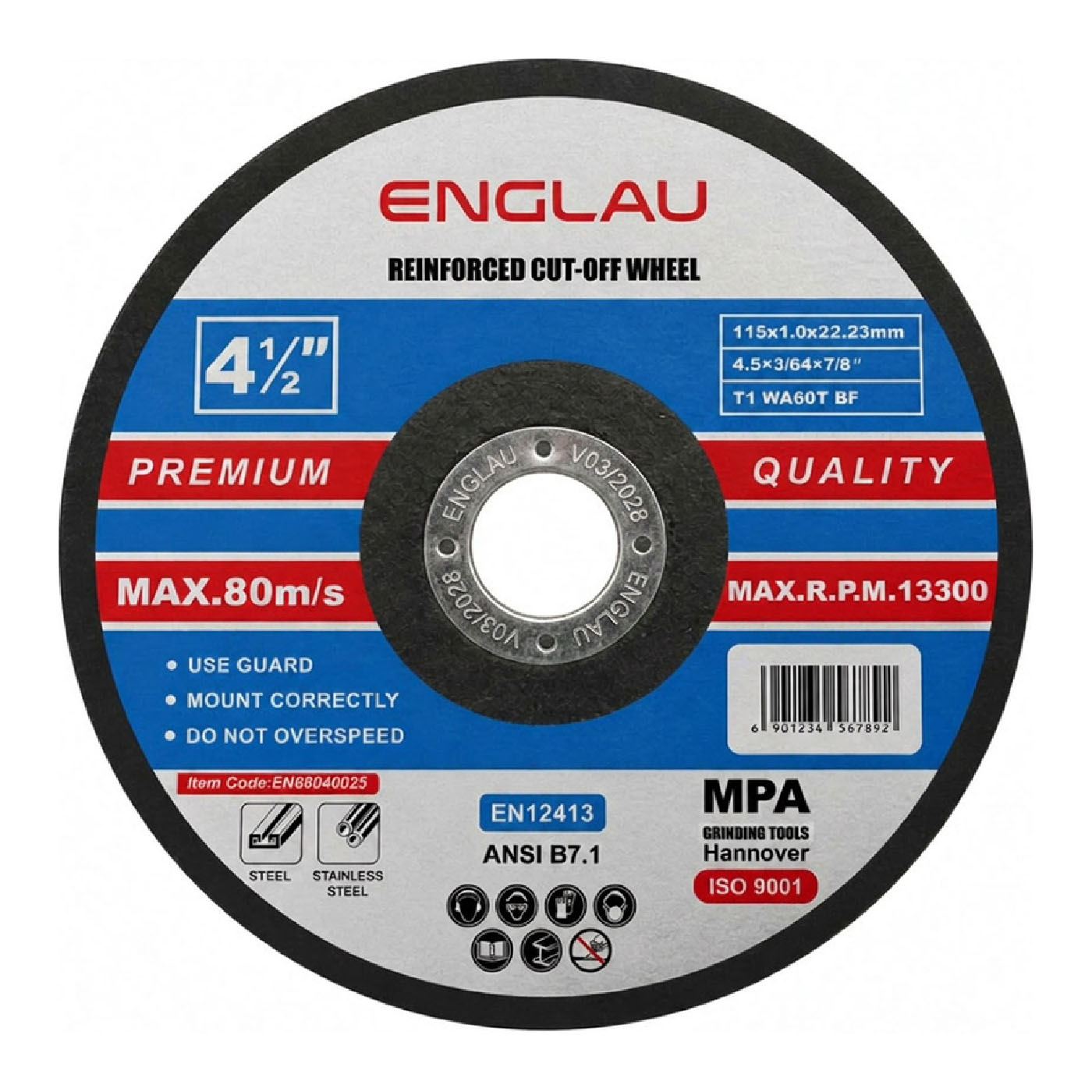
- WAbrasive Wheel Marking Requirements: All abrasive wheels placed on the market for industrial use must be marked in accordance with Annex A of EN 12413 and ISO 525. These markings provide essential information for the safe selection, inspection, and operation of abrasive wheels, and must be verified by the operator before mounting any wheel.
Correct interpretation of wheel markings is a fundamental competency for all abrasive wheel operators. Using a wheel on an incompatible machine or at a speed exceeding its rated maximum is a primary cause of wheel disintegration incidents. Englau Group’s abrasive wheels carry all required EN 12413 markings, clearly displaying the maximum operating speed, wheel specification, and expiry date to support safe selection and use.
Abrasive wheel mounting and replacement must be carried out only by trained and competent personnel. In many jurisdictions, employers are legally required to ensure that all operators who mount abrasive wheels have received appropriate training and hold a valid abrasive wheel certification. Englau Group recommends that all industrial users consult the applicable national health and safety regulations governing abrasive wheel use in their country.
Required Wheel Markings
In compliance with EN 12413, all Englau Group abrasive wheels carry the following mandatory markings:
- Trademark and test records.
- Restrictions.
- Speed strip.
- Expiry date.
- Dimensions (in mm).
- Specification mark.
- Code number.
- The speed is marked clearly (in RPM).
- The maximum operating speed and ISO Type number (shape).
The expiry date
All abrasive wheels with organic bonding used with a handheld tool have an expiry date three years after manufacture.
The code number
This is a traceable number that indicates the wheel’s manufacturing details.
The maximum operating speed
When an abrasive wheel has a diameter greater than 80 mm, the maximum operating speed needs to be marked on the wheel. The speed should be written in both RPM (revolutions per minute) and m/s (metres per second).
When wheels are under 80 mm, it’s impractical to mark them due to their small size. However, the maximum speed for these should be written somewhere on a workshop notice where it is clearly visible.
When speeds are 50 m/s or higher, a colour-coded stripe will appear on the wheel.
Interpreting the Specification Code
The specification code on an abrasive wheel provides a standardized description of the wheel’s key characteristics. While the precise format may vary between manufacturers, the code typically follows the sequence: abrasive grain type (letter), grain size (number), hardness grade (letter), wheel structure (number), and bond type (letter). For Englau Group products, the full specification code is printed on the wheel label alongside the EN 12413 certification mark, enabling straightforward cross-referencing with our technical datasheets.
Frequently Asked Questions
What abrasive wheel types does Englau Group offer?
Englau Group offers a comprehensive range of bonded abrasive wheels including straight grinding wheels (Type 1), depressed centre grinding wheels (Type 27), ultra-thin cutting discs from 1.0 mm, and large-diameter cutting discs up to 400 mm. Available grain types include aluminum oxide, zirconia alumina, silicon carbide, and our proprietary CERAMICS Plus ceramic alumina. Please contact our team for a full product catalogue and specification sheet.
What materials are the Englau Group abrasive wheels suitable for?
Englau Group abrasive wheels are formulated for use on carbon steel, stainless steel, aluminum, cast iron, titanium alloys, stone, concrete, and composite materials. Our application engineering team can recommend the optimal grain type and specification for your specific workpiece material and operating conditions.
What grit sizes are available?
Our coated and non-woven abrasive products are available in a wide range of grades and grit sizes to meet specific application requirements. Typical grit sizes offered include P36 to P1200 for coated abrasives and medium to ultra-fine grades for non-woven materials, covering most common needs from heavy stock removal to fine finishing. For specialised applications or the full range of available sizes, please contact us for our complete product specification sheet.
Are your products certified to international standards?
Yes. All Englau Group abrasive products are manufactured in strict accordance with the German EN 12413 standard, one of the most stringent quality certifications in the global abrasives industry. This standard governs safety and performance requirements for bonded abrasive tools, guaranteeing structural strength, operational safety, and uniform quality across our product range.
Can I request product samples or technical datasheets?
Yes. We welcome sample requests and can provide detailed technical datasheets for all product categories. Please contact our team directly with your product requirements, and we will respond within 3–5 business days.
Does Englau Group offer application-specific or custom formulations?
Yes. With over 20 years of experience, we develop market-specific, application-optimised formulations tailored to customers’ unique usage conditions and performance requirements.
Do you accept OEM orders and private label manufacturing?
Yes. Englau Group supports full OEM manufacturing and can produce our complete range of abrasive products under your brand, with custom labelling, packaging design, and product specifications customised to your market requirements. The minimum order quantity is 1,000 pieces per item.
For technical inquiries, product specifications, sample requests, or OEM discussions, please contact Englau Group directly:
Mr. Eric Lau
President, Englau Group Co., Limited
Room 1205, 12/F, 130-132 Des Voeux Road Central, Hong Kong
Phone: +86 137 7034 5768
Email: eric.twintrade@gmail.com